
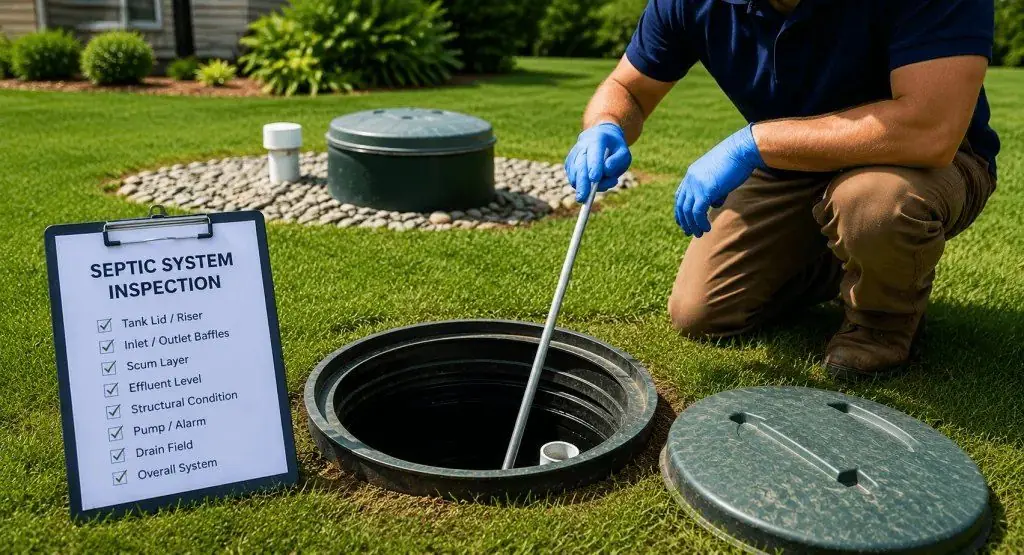
This inspection is for owners who want to know how their own system is doing: you have just moved in, the system is getting older, something seems off, or you want a baseline before planning work.
We work from the house to the field, in order: the line into the tank, the tank itself, any pump chamber and controls, the distribution box and the drain field. You get written findings with photos, a plain list of what needs attention now and what can be planned, and when the next service is due.
Buying or selling a home? Book a real-estate septic inspection, timed to your deadline →
When to book a septic tank inspection
- You moved in and have no inspection or pump-out records
- The system is getting older and has not been checked in years
- Drains are slow, toilets gurgle or there is a smell near the tank
- Wet, spongy or unusually green patches over the drain field
- You are adding a suite, bedrooms or more people to the home
- Your maintenance plan calls for a regular check of the system
- You want a baseline before planning repairs or a pump-out
Not sure this is the right service? Start with what you are seeing →
General septic inspection or real-estate inspection?
A general septic inspection is for owners who live with the system. It looks at condition, upkeep and what is due next, and it is a good first visit after you move in.
A real-estate septic inspection is for buyers and sellers. It is planned around the subject-removal or listing date and also compares what is in the ground with the records on file. If you are in a sale, book that one instead.
- General inspection: homeowners, routine checks, after moving in, before planning work
- Real-estate inspection: buyers and sellers working to a deadline
Septic tank inspection vs full system inspection
A tank inspection looks at the tank itself: levels, sludge and scum, baffles, walls, lids and the filter. It is often done with a pump-out, because an empty tank is easier to see.
A full system inspection adds everything after the tank: any pump chamber, floats and alarm, the distribution box and the drain field. The most costly septic problems usually start there, so on most rural properties the full system check is the one to book.
- Tank only: levels, baffles, walls, lids and filter
- Full system: the tank plus pump, alarm, D-box and drain field
Septic records and maintenance in BC
Under BC's Sewerage System Regulation, owners are expected to keep their system maintained according to its maintenance plan and to keep records of that maintenance. Systems built or altered under the regulation come with a maintenance plan; many older systems have none.
Fraser Health holds the septic filings for properties in the Fraser Valley. Vancouver Coastal Health covers Richmond, the North Shore and Squamish. Our written findings give you a current record to keep with those papers, whatever is on file.
- Keep the findings with your system drawings and maintenance plan
- Keep pump-out and repair records in the same place
- Pass them to the next owner when you sell
What our septic tank inspection covers
- Go over any records, drawings and maintenance plan you have
- Locate the tank and lids, and tell you first if digging is needed
- Open the tank and check the liquid level, scum and sludge depth
- Check the inlet and outlet baffles, tank walls, lids and risers
- Check and clean the effluent filter if the tank has one
- Test the pump, floats and high-level alarm on pumped systems
- Check the distribution box where it can be reached
- Walk the drain field for wet areas, odour, surfacing effluent and roots
- Give you written findings with photos and the next service date
Safety first. Never open a tank lid or lean over an open tank. Tank gases are dangerous and a fall in can be fatal. Leave the lids closed and keep children and pets away until we arrive.
Septic tank inspection cost: what changes the price
- Whether it is a tank-only or a full system inspection
- Tank location, number of lids and whether they need digging out
- Pumps, alarms and the size of the drain field to check
You get the price before we start.
Before your septic tank inspection
- Any system drawings, maintenance plan or past pump-out records
- Where the tank lids are, if known; do not open them
- What you have noticed, such as slow drains, smells or wet ground
Septic tank inspection questions
What is included in a septic tank inspection?
We check the liquid level, scum and sludge depth, the inlet and outlet baffles, the tank walls and lids, and the effluent filter if there is one. A full system inspection adds the pump, floats and alarm, the distribution box and the drain field.
How often should a septic system be inspected?
Follow the maintenance plan for your system if it has one. Pumped and treatment systems usually need at least a yearly visit. If there is no plan, an inspection helps set a schedule that fits your tank and household.
Is this the same as a real-estate septic inspection?
No. This inspection is for owners checking the condition of their own system. If you are buying or selling, book our real-estate septic inspection, which is planned around your deadline and compares the system with the records on file.
Does the tank have to be pumped for an inspection?
Not always. We can measure the levels and check the baffles and filter without pumping. Pumping on the same visit lets us see the walls and floor of the empty tank, so it is worth doing if the tank is due anyway.
Can you inspect a tank with buried lids?
Yes. We locate the tank and dig the lids out, which adds time. Risers bring the lids up to grade so the next inspection is quicker.
What happens if you find a problem?
We show you what we found, explain what it means and tell you what needs fixing now and what can wait. You get the price before any repair starts.